Release Ho-Yin Mo / 釋放毛皓延

Statement from the Chinese American Democratic Club on the Detention of Ho-Yin Mo
The Chinese American Democratic Club (CADC) is deeply concerned by the detention of Ho-Yin Mo, a field representative for Assemblymember Catherine Stefani and a longtime member of the Bay Area’s Chinese American community.
Ho-Yin is a dedicated public servant whose work has helped San Francisco and Bay Area residents access health care, child care, food assistance, and other essential services. Before joining the California State Legislature, he served our community as a Chinese-language journalist and an AAPI organizer. His contributions have strengthened civic participation and helped community members feel seen, heard, and supported.
CADC joins Assemblymember Stefani and other Bay Area leaders in calling for Ho-Yin’s prompt release while his immigration case is reviewed. He must be afforded access to legal counsel, a fair and transparent process, and the opportunity to remain connected with his family and community.
This detention has caused fear and distress throughout the Chinese American and immigrant communities. Immigration enforcement must never come at the expense of due process, dignity, or humane treatment.
We stand with Ho-Yin, his loved ones, his colleagues, and the many community members he has served. We urge federal authorities to release him and allow him to return safely to his home, his community, and his public service.
Chinese American Democratic Club
San Francisco
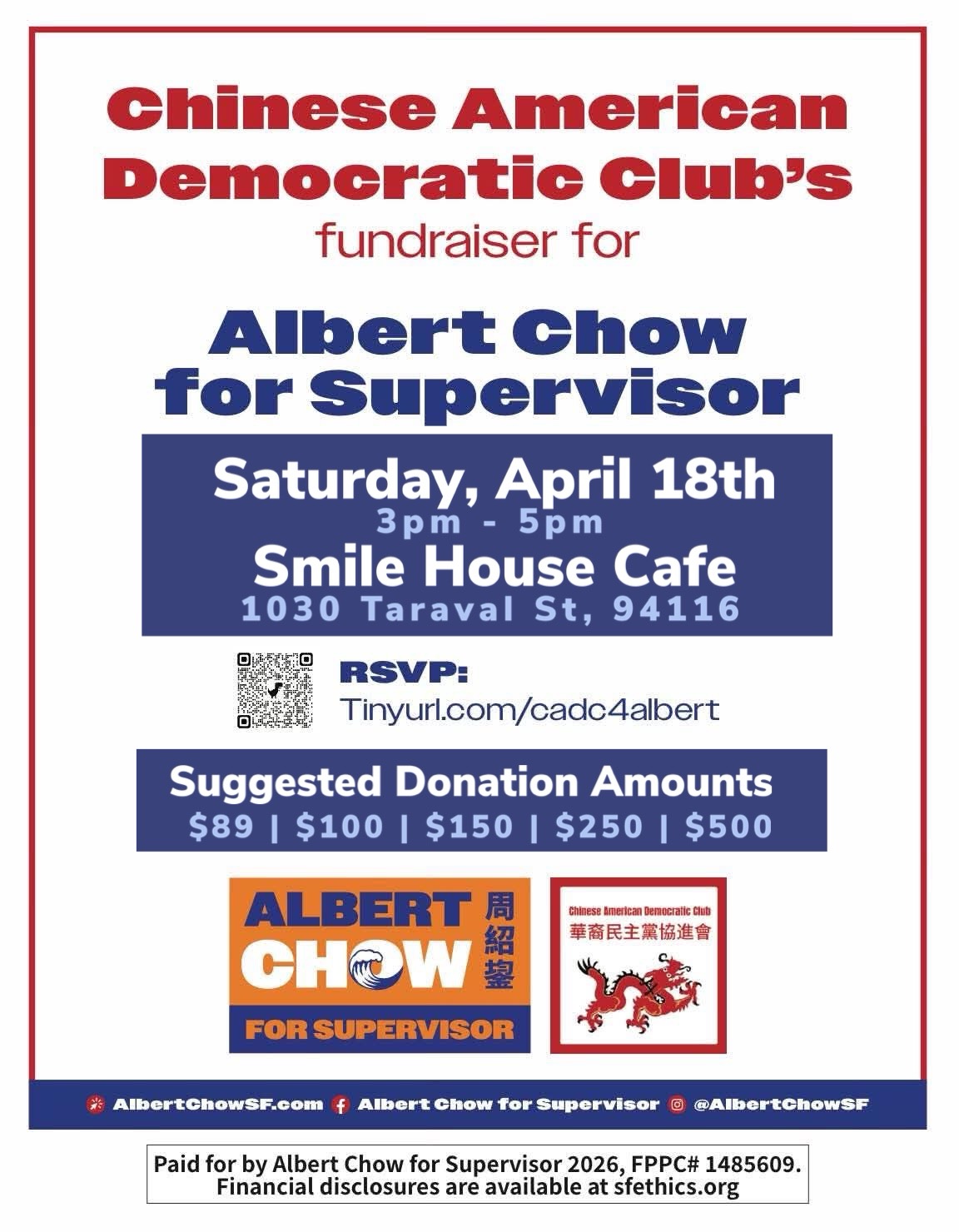
CADC Fundraiser for Albert Chow for Supervisor
Venue: Smile House Cafe (1030 Taraval St., San Francisco, CA 94116)
Suggested Donation Levels: $89, $150, $250 or $500 at AlbertChowSF.com.
RSVP: https://tinyurl.com/cadc4albert
Albert Chow is a proven community leader who led the consequential 2024 No on K campaign that CADC supported, in order to preserve the Great Highway compromise and protect the fabric of Westside’s multigenerational community. As a legacy hardware store owner who knows the nuts and bolts of the neighborhood, and longtime leader of People of Parkside Sunset (POPS), he has built beloved community traditions like Movie Nights and Tree Lighting, and helped launch the Farmers Market, Night Markets, Chinese Culture District and Great Hauntway. Albert has delivered real results, including safer crossings on Sunset Boulevard and $1 million for Taraval merchants affected by L-Taraval construction. He has made a lasting impact across District 4. Come join us at the fusion restaurant Smile House Cafe where the East meets the West right at Taraval & 22nd Ave.
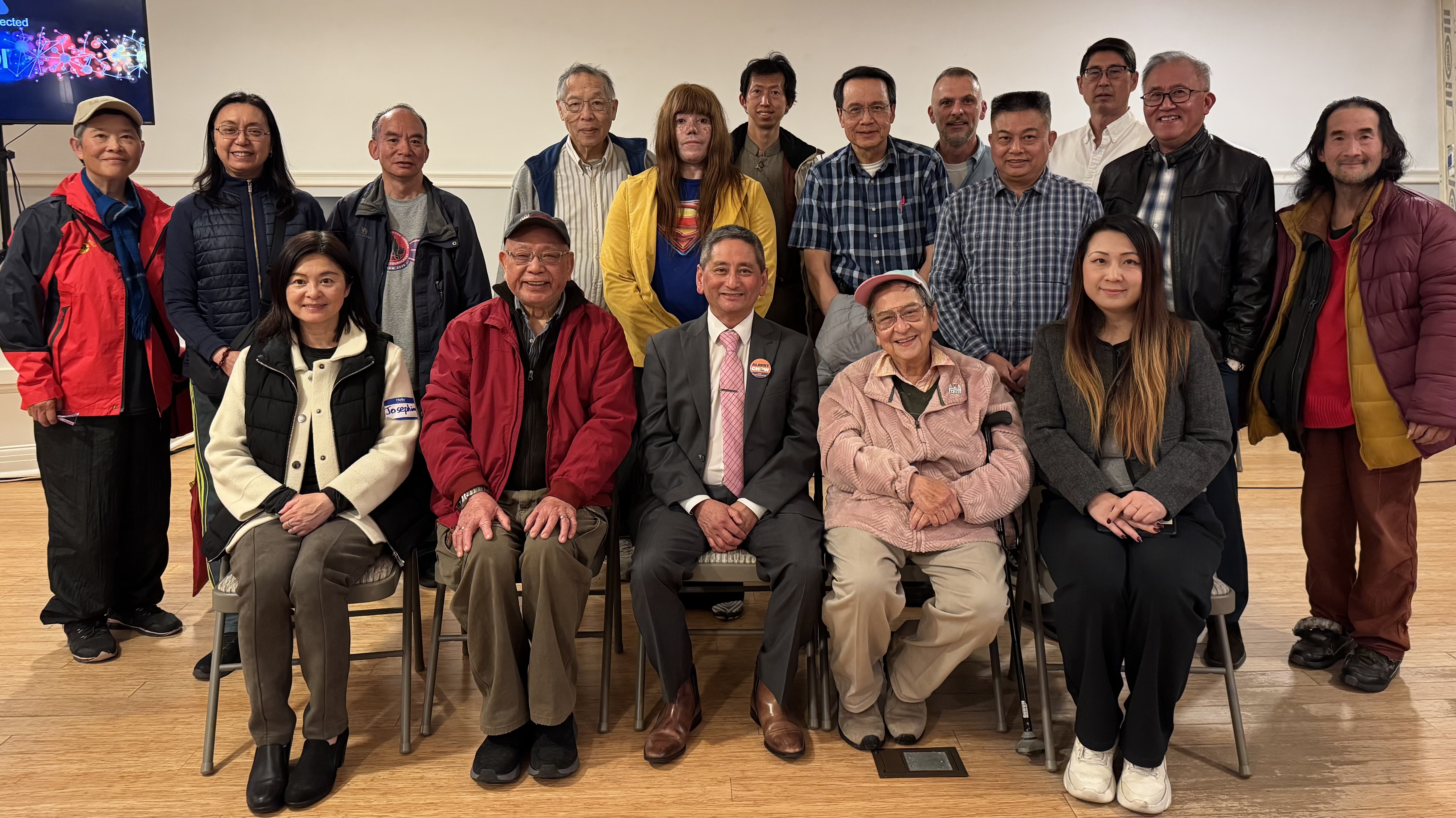
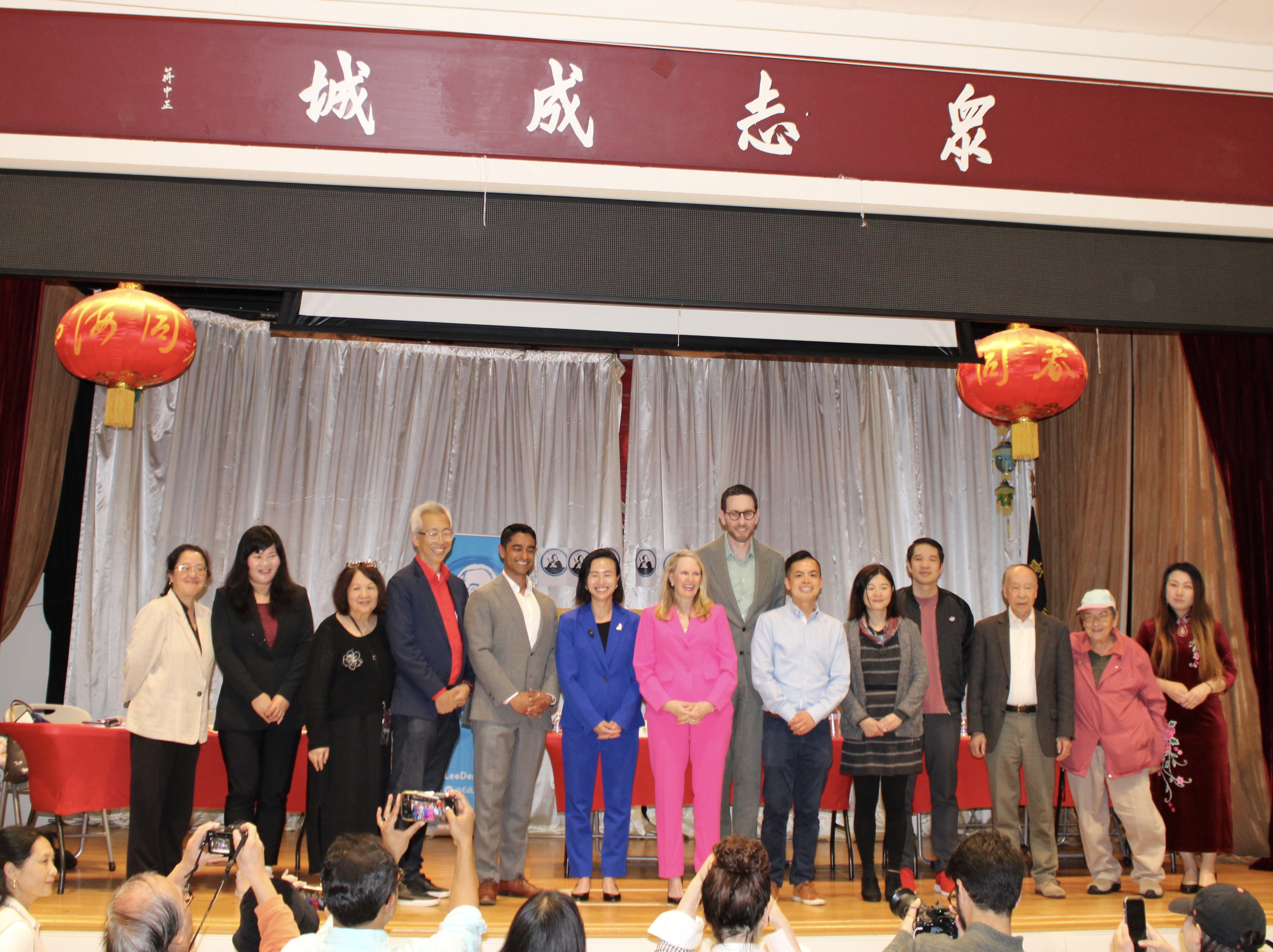
Huge Turnout in Chinatown for the Asian American Community Congressional Candidate Forum
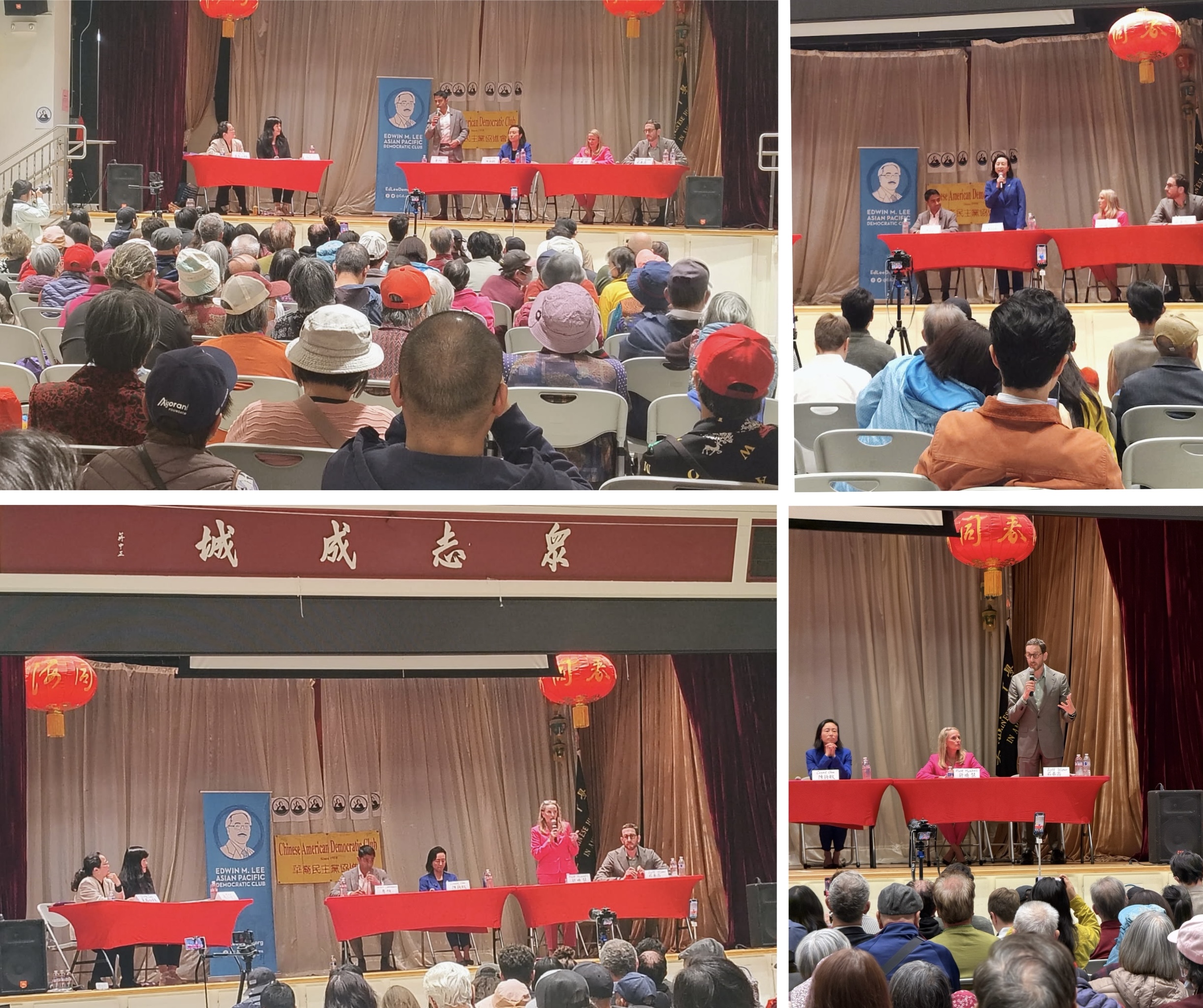
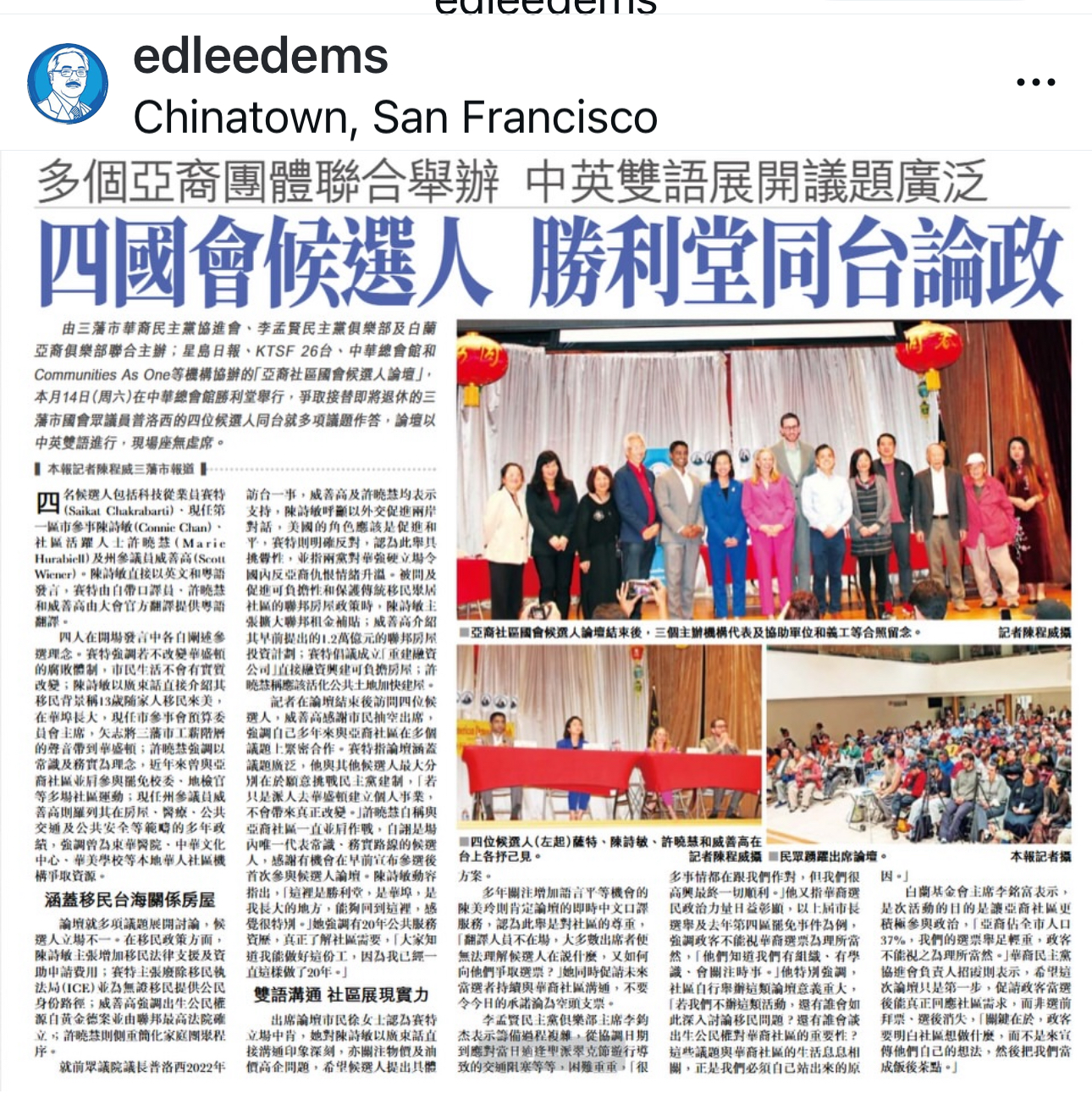
Huge turnout in Chinatown 4 the Asian American Community Congressional Candidates Forum. Thanks Saikat Chakrabarti, Supervisor Connie Chan, Marie Hurabiell and State Senator Scott Wiener for engaging with nearly 300 community leaders on international relations, Taiwan Straight, immigration, legislative priorities, housing and community representation.
Here are the coverages:
- Singtao Newspaper:四國會候選人 勝利堂同台論政 / Four Congressional Candidates Discuss Policies at Victory Hall
- KTSF Channel 26: 四位民主黨籍聯邦眾議員主要候選人,針對亞裔社區關注的議題做出回應,包括「台灣問題」3.16(國)
- Mission Local: Race for Nancy Pelosi’s seat goes to Chinatown, where Taiwan takes the stage
- Epoch Times: 舊金山中國城國會議員候選人論壇 聚焦華人關注議題 / Chinatown Congressional Candidates Forum Focuses on Chinese Community Concerns
- Rose Pak Club’s Live Recording
- Ed Lee Dems' Post on Instagram
- CADC Post on X
- Han Li's Post on X
Here were the promotions:
- KTSF: 有社區組織將於週六主辦亞裔社區中英文雙語國會候選人論壇,免費開放民眾參加 / Community organizations will host a bilingual Asian American Community Congressional Candidates Forum this Saturday, open to the public at no cost
- Singtao Newspaper: 亞社國會候選人論壇 周六勝利堂雙語舉行 / Asian American Community Congressional Candidates Forum to be held bilingually on Saturday at Victory Hall
- S. F. Public Press to livestream Asian American Community Congressional Candidate Forum
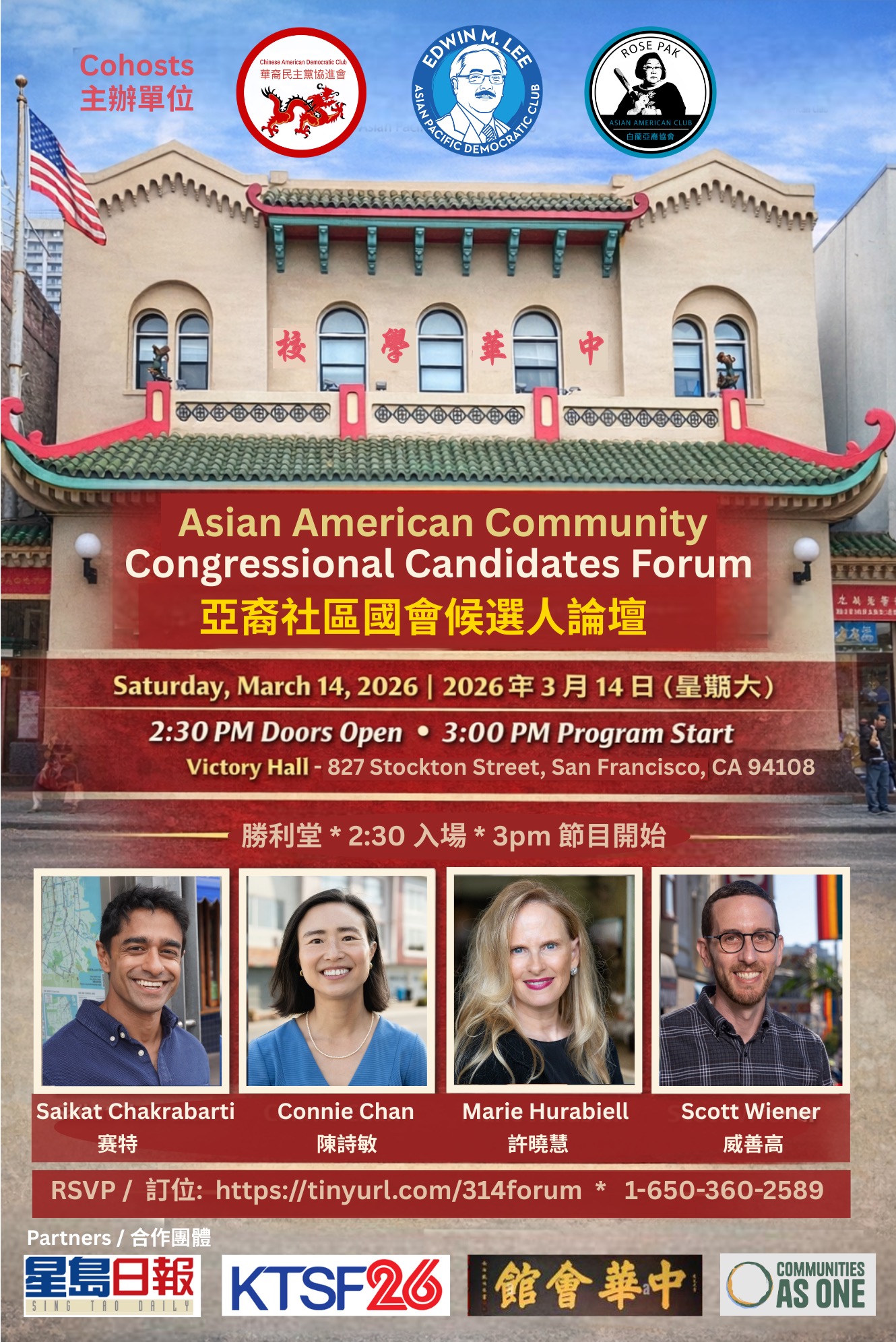
Historical event jointly organized by CADC! RSVP today
Asian American Community Congressional Candidates Forum
When: 3/14/2026 Saturday 2:30pm entry, 3pm - 4:30 program
Community Impact Statement from the Chinese American Democratic Club (CADC)
Community Impact Statement from the Chinese American Democratic Club (CADC)
The Chinese American Democratic Club (CADC) submits this statement with deep respect for the court and with profound grief for the loss of Vicha Ratanapakdee, known to many of us as Grandpa Vicha.
Read moreCADC Response to Supervisor Alan Wong’s Decision to Back the Reopening Great Highway Ballot Measure | By Selena Chu
Speech of Rose Pak Asian American Club President in Joint Holiday Party | By Jeremy Lee

CADC’s Speech at the Joint Holiday Party | by Selena Chu
Tonight, we come together not just to celebrate an organization, but to celebrate a movement, a legacy, and a shared commitment to civic engagement and justice.
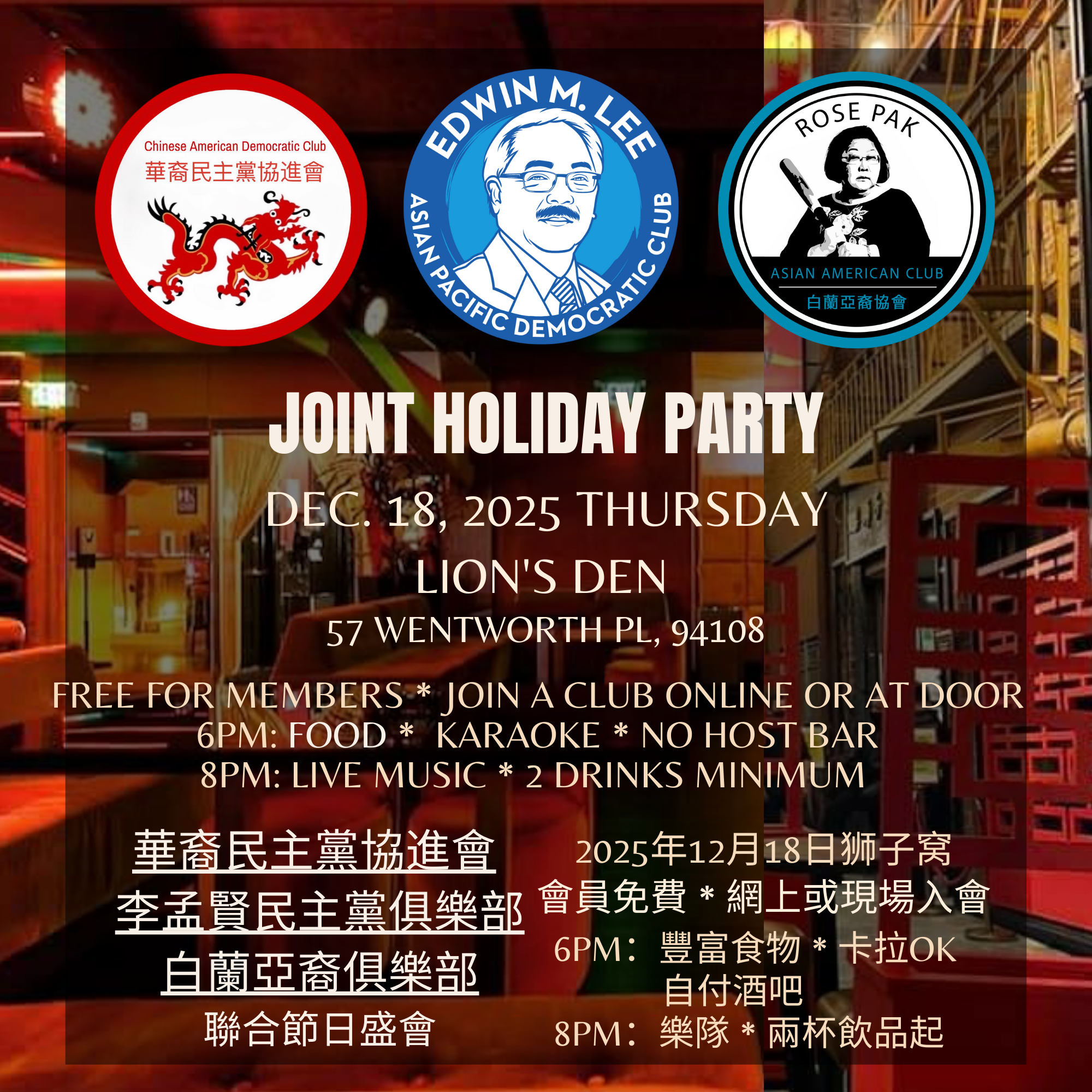
Historic! 3-Club Joint Holiday Party
Speech by CADC 1st Vice President Selena Chu
Speech by Rose Pak Club President Jeremy Lee
Joint Holiday Party for
Chinese American Democratic Club (CADC),
Ed Lee Democratic Club (ELDC) and
Rose Pak Asian American Club (RPAAC)
December 18, 2025 Thursday
Lions Den
(57 Wentworth Pl, 94108)
6pm: Lots of Food, Karaoke, No Host Bar
8pm: Live Music, 2 Drinks Minimum
FREE for members of any of the three clubs.
Not a member yet? Join a club NOW or sign up at the door.
- Join CADC: https://sfcadc.org/
- Join Ed Lee Dems: https://www.edleedems.org/join
- Join Rose Pak Club: https://www.rosepakdemclub.org/join-us
Support Asian Americans in San Francisco's advocacy. Join a club, or two or all three, TODAY! See you at the party.
Letter of Concern Regarding the Adaptive Reuse of Historic Buildings Ordinance
Dear Members of the Land Use & Transportation Committee,
We are writing to express strong concern regarding File No. 250886, the Mayor’s proposed Adaptive Reuse of Historic Buildings ordinance. While we support the intent of preserving historic structures and revitalizing long-underused spaces, we want to raise a critical issue that appears to have been overlooked: the potential for cannabis retail and cannabis cultivation businesses to enter neighborhood merchant corridors through newly relaxed use rules for Historic Buildings.
Under this legislation, many uses that are currently Not Permitted (NP) in Neighborhood Commercial Districts would become Conditionally Permitted (C) or even Principally Permitted (P) when located in a Historic Building. This change is clearly outlined in Section 202.11(d)(3) of the ordinance, which states that uses not otherwise permitted in an NC District may become permitted in Historic Buildings (FILE NO. 250886)
While we understand the economic rationale behind adaptive reuse, it is essential to recognize the unintended consequences of opening a pathway or cannabis uses to re-enter communities that have fought for years to protect themselves from over-concentration.
Our neighborhoods, including the Sunset, Richmond, Outer Mission, Visitacion Valley, Portola, and Bayview, have already endured more than a dozen attempts by cannabis retailers to open storefronts in close proximity to immigrant, monolingual, senior, and youth-serving corridors. These communities organized tirelessly, and in many cases successfully, to prevent further clustering of cannabis businesses in areas where residents overwhelmingly opposed them.
Yet under this ordinance, long-protected corridors such as: Irving, Judah, Noriega, Taraval, Lawton, Clement, Balboa, Geary, Leland, San Bruno Avenue, and 3rd Street (Bayview)
could become newly vulnerable simply because a building happens to carry Historic status.
We are deeply concerned that this bill unintentionally creates a loophole that could allow cannabis retail or cultivation uses that were explicitly rejected by voters and families in these neighborhoods to be “sneaked in” through the Adaptive Reuse process.
Even more concerning is that Chinatown appears to be the only neighborhood exempted, leaving other Asian and immigrant communities without equal protection.
While we support adaptive reuse as a strategy for preserving our historic building stock and improving economic vitality, the City must not allow this legislation to undo years of community work safeguarding vulnerable commercial corridors.
We respectfully request the following:
-
Explicit exclusion of Cannabis Retail and Cannabis Cultivation from any new permissions granted under Section 202.11 for Historic Buildings.
-
Parallels in protection for all culturally significant immigrant corridors not only Chinatown especially where families have already expressed clear opposition to such uses.
-
Clarification from the Mayor’s Office as to whether cannabis uses were considered during drafting, and if not, a commitment to amend the legislation before it proceeds to the full Board on Tuesday.
For nearly a decade, San Francisco’s Chinese and Chinese-American communities have been some of the most consistently vocal opponents of marijuana storefronts in the city. From Chinatown to the Sunset, Richmond, Portola, Visitacion Valley, and the Bayview, families, seniors, parent groups, and small-business owners have repeatedly organized protests, submitted hundreds of letters, and turned out to public hearings to oppose cannabis dispensaries near schools, senior corridors, and immigrant-serving businesses. Their efforts led directly to the Board of Supervisors’ 2018 decision to ban cannabis retail in Chinatown, and more recently to high-profile community actions such as the “Pasta Not Pot” demonstrations in the Sunset. Across these neighborhoods, the message has been consistent: residents do not want cannabis shops concentrated in the cultural and commercial corridors that serve immigrant families, children, and elders.
Neighborhood commercial corridors are the cultural and economic heart of our communities. They must not be placed at risk intentionally or unintentionally by zoning changes that open the door to uses residents have repeatedly opposed.
Thank you for your consideration and for your service to our communities. We urge the Committee to amend the ordinance to ensure that cannabis uses remain prohibited in these sensitive corridors.
- Chinese American Democratic Club